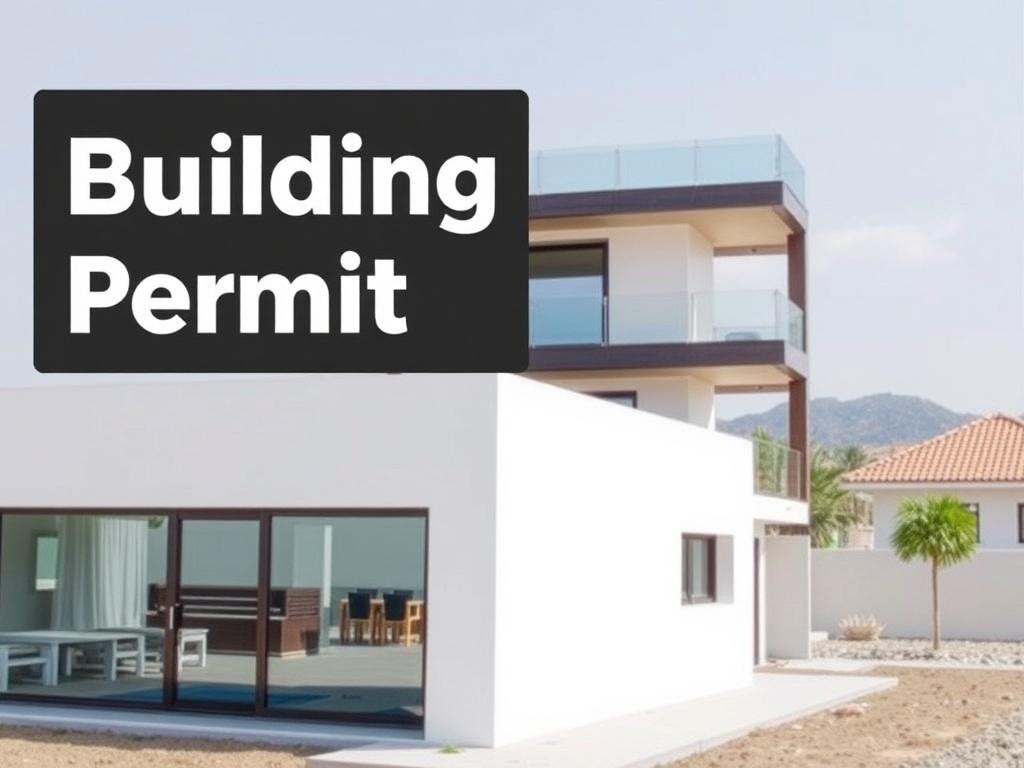
Building Permits in Cyprus: Construction Rules for Property Developers
Developing property in Cyprus requires more than capital and a good plot; it demands a firm grasp of the regulatory architecture that governs every brick laid and beam installed. This article walks property developers, consultants, and investors through the technical landscape of clearance, permissions, and compliance — clarifying roles, timelines, constraints, and practical strategies to reduce risk.
Whether you are assessing a small renovation or a multi-unit residential development, understanding cyprus building permits and the interplay between local planning authorities and national law is essential. If you are exploring residential investments and need context for site selection, consider resources that list available properties such as buy house in Cyprus to tie regulatory feasibility to market opportunities.
Regulatory Architecture: Who Decides What
The planning system in Cyprus is a hybrid of central directives and local administration, with several agencies and statutory instruments shaping the outcome of any construction project. At the top, national legislation frames construction laws Cyprus-wide, while municipal and district planning departments interpret and implement those rules for permits and enforcement.
Understanding which jurisdiction controls a particular decision is the first technical filter for any developer. The Department of Town Planning and Housing (DTPH), district planning departments, municipal councils and, in certain coastal or environmentally sensitive areas, special committees or national agencies each have discrete powers and processes. This division of responsibility affects timeframes for construction permits Cyprus-wide and determines the proper route for appeals or compliance queries.
Clarity about the relevant authority short-circuits delays: know whether your project falls under national law, district council control, or special-environment jurisdiction before applying for development permits.
Key Institutions and Their Roles
The DTPH sets overarching policy and issues permits in certain categories; municipalities and district offices handle local planning applications, zoning interpretation, and issuing many of the development permits developers need. Environmental impact assessments (EIAs) and coastal works often involve the Department of Environment and the competent coastal authority, respectively. Utilities and fire-safety approvals are handled by separate technical departments.
Legally, the distinctions matter because different authorities use different checklists, and missing an approval from one agency can stall an entire project. Developers must assemble a permissions matrix at project outset: itemize which clearances are mandatory, the lead office, statutory timelines, and potential interactions with construction regulations Cyprus demands.
Types of Permits and When They Are Required
Not all projects trigger the same approvals. From minor alterations to large-scale developments, the permit landscape ranges across a spectrum. The most common categories include planning permission (cyprus planning permission), construction permits cyprus, specialized development permits for agricultural or coastal land, and permits required for business or change-of-use.
Distinguishing between a development permit and a construction permit Cyprus requires careful reading of local bylaws. A development permit generally covers land-use and density decisions, while a construction permit authorizes the physical act of building, tied to technical drawings and compliance with building regulations Cyprus imposes.
Securing the correct permit type first avoids duplicate inspections and retroactive enforcement that can invalidate insurance and mortgages.
Common Permit Categories Explained
Below are the permit categories developers will encounter most frequently, with brief descriptions of their legal purpose and typical triggers.
- Planning Permission (Cyprus planning permission): Authorizes land use, maximum footprint, building height, setbacks, and compliance with local master plans.
- Construction Permit (Construction permits Cyprus): Grants approval to commence works based on detailed technical drawings, structural calculations, and safety plans.
- Development Permits: A higher-level authorization for substantial change to land use, subdivision, or intensive development projects often requiring public consultation.
- Special Approvals: Includes environmental permits, heritage consents for listed properties, and coastal works approvals.
Each category carries its own application form, technical annexes, and statutory timeframe. In practice, an integrated permit application strategy often bundles several approvals in a coordinated submission to reduce cumulative delays.
Application Process: A Step-by-Step Technical Guide
Successful permit acquisition involves a series of deliberate technical steps: pre-application checks, specialist studies, formal submission, statutory consultation, revision cycles, and final issuance. Treat the process as a project stream with milestones, not a single bureaucratic event.
Proper sequencing reduces rework. Early identification of constraints — such as archaeological finds, protected habitats, or infrastructure capacity — shapes the engineering design and the content of your development permits application, avoiding last-minute redesigns that inflate costs and erosion of stakeholder trust.
Think in phases: pre-application reconnaissance, technical studies, formal submission, and compliance monitoring — each phase has deliverables that affect permit outcome and timelines.
Pre-Application Checklist
Before drafting plans, a developer should confirm land title, check zoning and permitted uses, run a site constraints analysis, and obtain preliminary engineering opinions. This phase often requires geotechnical surveys, topographic surveys, and utility capacity assessments.
Compiling a pre-application package helps during meetings with municipal planning officers, where informal feedback can be obtained on likely conditions or objections. Doing this reduces the number of formal resubmissions and shortens the time to final permit.
Formal Submission and Technical Documentation
A complete submission typically contains architectural drawings, structural and civil engineering calculations, drainage and wastewater schemes, energy-efficiency reports, landscaping plans, and any required EIAs. Fire safety designs and access statements are mandatory for many building classes. Each document must be certified by a licensed professional — and those certifications are scrutinized for technical compliance with construction laws Cyprus enforces.
It is common to include a compliance matrix that cross-references each regulation clause to the corresponding drawing or report — a practice that simplifies the reviewer’s task and reduces iterative requests for clarification.
Technical Standards: Building Regulations in Cyprus
Building regulations Cyprus imposes address structural safety, fire resistance, thermal performance, acoustic insulation, and accessibility. These standards are technical, often referencing European norms and technical codes, and they impose minimum design requirements for materials, loadings, and systems.
Compliance is verified through stamped engineering designs, on-site inspections, and testing. Modern developments face additional obligations: energy performance certificates, renewable-energy integration where applicable, and stricter thermal insulation thresholds to meet EU energy efficiency objectives.
Meeting the technical minimums is necessary but not sufficient; well-documented compliance and traceable inspections are what permit authorities require to finalize approvals and issue occupancy certificates.
Structural and Seismic Considerations
Cyprus lies in a seismically influenced region; therefore, structural design must comply with current seismic codes and load combinations. Engineers must provide calculations for lateral load resistance, detailing of reinforcement, foundation design against liquefaction risks where applicable, and checks for dynamic response of tall or irregular buildings.
Local building regulations Cyprus enforces are harmonized with Eurocodes in many respects, and registered structural engineers are expected to apply these standards rigorously in the construction permit submissions.
Fire Safety, Accessibility, and MEP Systems
Fire safety requirements mandate compartmentation strategies, escape routes, fire-rating of critical elements, and installation of detection and suppression systems according to building class. Accessibility rules ensure barrier-free access for residents and visitors, including ramps, lifts and designated parking.
Mechanical, electrical, and plumbing (MEP) designs must match capacity assumptions of the building and comply with standards for potable water, wastewater disposal, and energy systems. Non-compliance in MEP design commonly triggers permit conditions that require expensive retrofits if discovered late.
Environmental, Coastal And Heritage Constraints
Environmental assessment is an independent axis of permission. Projects that may significantly affect habitats, water bodies, or coastal zones often require an EIA and separate approvals. The presence of archaeological remains on a site triggers an entirely different set of statutory requirements under cultural heritage law.
In coastal zones, additional construction laws Cyprus applies impose setbacks, limit permissible densities, and often prohibit construction within certain bands adjacent to the shoreline. Developers must integrate environmental constraints early in site selection and design, because mitigation measures can materially change project economics.
Environmental and heritage approvals are non-negotiable; anticipating their technical requirements early prevents redesigns and public opposition at later stages.
Environmental Impact Assessments (EIA)
EIAs quantify expected impacts, propose mitigation measures, and document stakeholder consultation. For larger developments, the EIA is a comprehensive technical study prepared by qualified consultants and submitted with the planning or development permits application. In certain cases, a strategic environmental assessment may be required at the plan level.
An EIA’s quality affects not only permit approval but also insurance pricing and bank lending decisions: lenders commonly require satisfactory EIA conclusions before financing a project.
Fees, Timelines, and Expected Delays
Costs and statutory timelines for processing vary by local authority and project complexity. Fees are tiered by the size and type of development and often include application fees, inspection fees, and contributions to local infrastructure or open-space funds. Knowing the fee schedule upfront is part of accurate project budgeting.
Official timelines are useful benchmarks, but practical processing times can be longer due to staffing limitations, seasonal backlogs, or unresolved technical objections. Developers should build buffer time into their schedules and consider fast-track options where available or parallel-processing of non-conflicting approvals.
Build realistic contingencies into project schedules: statutory timelines are minimums, not guarantees, and many delays are precipitated by incomplete documentation or late-stage technical objections.
Typical Processing Time Ranges
Small-scale residential permits may clear in a few weeks in cooperative municipal offices; larger developments often require multiple months or even a year from submission to final permit. Environmental approvals and appeals add further time. Transparent coordination with the relevant authority can often reduce this elapsed time by resolving queries early.
Appeals, Compliance, Inspections And Enforcement
When a permit application is refused or when an enforcement notice is issued, Cyprus provides statutory appeal pathways. Appeals must be founded on technical grounds — demonstrating compliance with applicable development plans, legal precedents, or corrected technical submissions.
Inspections occur at specified construction milestones: foundations, superstructure, waterproofing, and final fit-out. Failure to obtain required inspections or to remedy deficiencies after an inspection can lead to stop-work orders, fines, or mandates to dismantle unlawful works.
Strict record-keeping of approvals, stamped drawings, and inspection reports is the developer’s primary defense during appeals or enforcement actions.
Common Reasons for Enforcement Actions
Enforcement typically stems from unauthorized deviations from approved plans, construction without a valid construction permit, changes of use without planning permission, or failure to comply with environmental or heritage requirements. Rectifying enforcement often requires retrospective applications, fines, and sometimes demolition orders.
Insurance and financing arrangements are also dependent on lawful construction status; therefore, enforcement action can halt funding lines and amplify commercial risk.
The Role of Professionals: Who You Need on the Team
Given the technical complexity of the permit landscape, a multidisciplinary team is essential. Key professionals include an architect licensed in Cyprus for planning applications, a chartered or licensed structural engineer, civil engineer for infrastructure, environmental consultant for EIAs, and a legal advisor who specializes in construction laws Cyprus applies.
For certain approvals, you also need specialists such as archaeologists, landscape architects, or coastal engineers. The presence of a single point project manager to coordinate submissions and follow-ups with authorities substantially improves responsiveness and reduces the chance of conflicting technical inputs.
Assembling the right technical team early is an investment: the incremental cost is small relative to the risk and expense of remedial measures for poor initial submissions.
Responsibilities and Certification
Professionals are responsible not only for preparing technical documents but also for certifying that works comply with the submitted designs. Wrong or misleading certifications can expose professionals and developers to civil liability and criminal sanctions in some cases, so each professional must be clear about their scope and liabilities.
Most permit regimes require a lead professional — often the architect or a principal engineer — to act as the formal point of contact and to provide periodic compliance certifications during construction.
Practical Strategies for Developers: From Feasibility to Handover
Developers can adopt practical strategies to streamline permitting: early stakeholder engagement, staged permitting, modular design for repeatability, and pre-certification of details such as standardized structural modules. Pre-negotiated conditions with the planning authority can be converted into contract deliverables for contractors and subcontractors.
Risk allocation in contracts should explicitly address permit delays, design variations required by authorities, and cost-sharing for remediation of unforeseen constraints like contaminated soil or archaeological discoveries. This level of planning improves bankability and reduces disputes during construction.
Strategic project packaging — including early authority liaison and risk-aware contracts — reduces permit-related schedule slippage and cost escalation.
Risk Management and Contractual Clauses
Include clear clauses for force majeure, permit delay extensions, and price re-openers tied to objective milestones. Define who bears the cost of design changes mandated by regulators versus those arising from contractor mistakes. Performance bonds and retention regimes should reflect the probability of permit-related adjustments during construction.
Where lenders are involved, anticipate their compliance milestones and integrate reporting obligations into project workflows so that permit conditions, inspections, and certifications align with drawdown schedules.
Cost-Benefit Table: Permit Types vs Typical Lead Times
The following table summarizes common permit types, responsible authority, and typical lead times. Use it only as an indicative guide; local variations and project complexity can materially change these figures.
| Permit Type | Lead Authority | Typical Lead Time |
|---|---|---|
| Minor Works Construction Permit | Municipal/District Office | 2–8 weeks |
| Major Construction Permit (New Build) | District Office / DTPH | 3–9 months |
| Development Permit / Land Use Change | District Council / DTPH | 3–12 months |
| Environmental Impact Assessment | Department of Environment | 3–12 months |
| Coastal Works / Shoreline Development | Coastal Authority / Ministry | 6–18 months |
Common Pitfalls and How to Avoid Them
Several recurring issues cause delays and disputes: incomplete technical submissions, failing to secure required third-party consents (e.g., utility connections or servitude releases), ignoring local zoning subtleties, and insufficient archaeology or ecology surveys. Each of these can be avoided with targeted diligence early in the project lifecycle.
Developers who underestimate the time and cost of mitigation measures — such as habitat restoration or archaeological excavation — frequently see projects stall. Budget conservatively for contingencies and maintain a buffer for specialist studies that can alter foundation or siteworks approaches.
Early technical completeness beats late-stage firefighting: comprehensive surveys, certified drawings, and proactive authority engagement are the most effective countermeasures to common pitfalls.
Red Flags During Due Diligence
Watch out for ambiguous or encumbered title documents, missing utility easements, informal land-use approvals that were not formalized, and any unresolved enforcement records on neighboring plots. These red flags often cascade into permit challenges or post-construction disputes.
A thorough due diligence pack should include a copy of the last planning decision affecting the site, utility service commitments, cadastral plans, and a summary of applicable building regulations Cyprus imposes for that specific parcel.
Innovations and Trends Affecting Permitting
Digitalization of permit submissions, online tracking of applications, and standardization of forms are modernizing the permitting process in Cyprus. Some municipalities now accept scanned documents and provide status updates online, which improves transparency and reduces physical bureaucracy.
At the regulatory level, increased emphasis on energy performance, sustainable materials, and resilience is shifting both design expectations and the technical content required for permit applications. Developers should anticipate additional reporting on embodied carbon and lifecycle performance for larger projects.
Adapting to digital submission platforms and sustainability metrics will increasingly determine a project’s timeline and approval probability.
How Technology Changes the Approval Game
Building information modeling (BIM) and integrated permit packages reduce errors and increase reviewer confidence. Sophisticated digital submissions allow reviewers to cross-check structural, thermal and fire-safety claims against a single coordinated model, cutting down on iterative clarification cycles.
Investing in digital coordination upfront reduces the number of RFI (requests for information) and accelerates inspections by enabling remote verification of certain compliance elements.
Final Blueprint: What Developers Must Remember
Managing permits in Cyprus is a technical discipline as much as a legal or administrative one. Successful projects align engineering rigor, legal clarity, and pragmatic project management: identify the correct permit types, engage the right professionals, and document every technical decision against the relevant clause of the building regulations Cyprus enforces.
Developers who adopt a structured, phased approach — front-loading technical investigations and liaising early with authorities — can materially reduce time and budget risk. Conversely, piecemeal design and late-stage regulatory surprises are the leading causes of cost overruns and reputational damage.
Before committing to land acquisition or construction start dates, ensure that: (1) entitlement and permit feasibility have been independently verified, (2) a multi-disciplinary team is contracted and briefed, and (3) contingency budgets and scheduling buffers reflect realistic processing times for construction permits Cyprus commonly requires.
Permit diligence is risk management: invest in it early, and the site will be your partner rather than an adversary.
Action Checklist for Immediate Implementation
Use this actionable sequence to bring a project from concept to a compliant build-ready status:
- Commission a comprehensive due diligence pack (title, zoning, utilities, environmental constraints).
- Engage a licensed architect and lead engineer to prepare initial concept documents and a permit roadmap.
- Conduct required specialist surveys (geotech, ecology, archaeology) and integrate findings into design.
- Submit coordinated planning and construction permit applications with a compliance matrix.
- Schedule inspections in alignment with construction milestones and maintain documentation for each stage.
Adhering to this sequence reduces iteration, builds lender confidence, and provides a defensible basis for project scheduling and contractual commitments.
1. What is the difference between planning permission and a construction permit in Cyprus? Answer: Planning permission (Cyprus planning permission) authorizes land use, density, and zoning compliance; a construction permit (construction permits Cyprus) authorizes physical works based on technical drawings and structural calculations. Both are often required sequentially. 2. How long does it typically take to obtain a major construction permit? Answer: Typical lead time for a major construction permit is 3–9 months, but complex projects or those requiring EIAs or coastal approvals can take longer; build schedule contingencies accordingly. 3. Which authority issues development permits for large projects? Answer: Development permits and major land-use changes are issued by the District Council or the Department of Town Planning and Housing (DTPH) depending on project scale and statutory criteria. 4. What technical studies are commonly required with permit applications? Answer: Common studies include geotechnical and topographic surveys, structural calculations, drainage and wastewater plans, environmental impact assessments (if applicable), and fire-safety and accessibility reports. 5. Can permits be appealed if refused? Answer: Yes, refusals and enforcement notices can be appealed on technical and legal grounds via statutory appeal processes; effective appeals rely on corrected technical documentation and legal counsel. 6. Are there special rules for coastal developments in Cyprus? Answer: Yes, coastal works require additional approvals and are subject to stricter setbacks, density limits, and environmental safeguards; specialized coastal and environmental assessments are typically mandatory. 7. How can developers reduce permit-related delays? Answer: Reduce delays by conducting early due diligence, assembling a multidisciplinary team, using coordinated technical documentation (BIM where possible), engaging early with authorities, and budgeting for realistic timelines and contingencies.