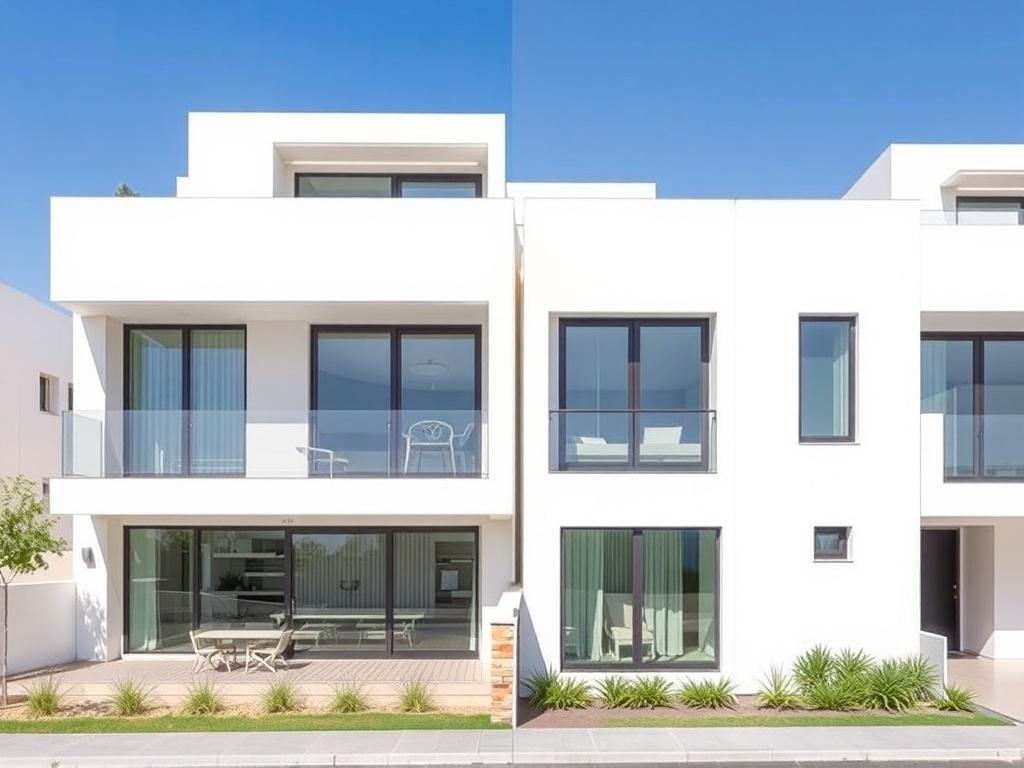
New Build vs Resale Properties in Cyprus: Investment Comparison
Investing in Cypriot real estate presents a choice that defines both the horizon and the returns: buy a new property Cyprus developer is delivering, or acquire a home from the resale property market. That decision touches construction quality, timing, taxation, rental potential and your tolerance for risk. This article maps those dimensions to help investors, owner-occupiers and portfolio managers make an evidence-based selection.
For investors weighing residency and citizenship incentives alongside property choices, resources such as Cyprus passport by investment often form part of the financial planning discussion. Below, the analysis separates structural facts from marketing rhetoric and gives a practical toolkit for the investor who needs to choose between new build vs resale Cyprus options.
Market Overview and Historical Context
Cyprus has evolved from a localized Mediterranean property market into an internationally recognized investment destination. Over the past two decades, capital inflows have moved through distinct cycles driven by tourism flows, foreign buyer demand (notably from Russia, the UK and increasingly from the Middle East), and domestic economic reforms. Understanding these cycles matters, because they influence both price elasticity and the absorption of new construction Cyprus projects.
Within that broader arc, the difference between new and resale stock is structural. New developments target modern amenities, compliance with recent building standards and, frequently, buyers seeking lower maintenance liabilities in the initial years. The resale property market captures inventory that is often better located or uniquely configured but may present legacy issues such as outdated systems, fragmentation of title documents, or deferred maintenance.
New build supply has been shaped by cyclical developer activity, while the resale property market reflects decades of ownership, location advantages and price corrections.
From an investment analysis perspective, the Cyprus property comparison must factor in macroeconomic variables — exchange rates, tourism growth, and regulatory changes — as well as micro-level drivers such as plot scarcity in coastal areas and urban planning restrictions. Demand for both new construction Cyprus units and resale homes is also evolving with demographic shifts: remote workers, long-stay tourists and retirees influence what product types command premium pricing today.
Supply Dynamics: New Build Inventory and Developer Strategy
Developers in Cyprus segment their offerings by location, amenity level and delivery speed. Coastal resorts and select suburban pockets attract condominium and villa projects designed to compete on lifestyle. Many new build Cyprus projects are designed for international buyers and thus emphasize low-maintenance finishes, energy efficiency and concierge-style services.
The lifecycle of a large development frequently involves staged sales, pre-sales to secure financing, and phased delivery that can span several years. That structure creates both opportunities — discounted pre-launch pricing — and risks, such as delivery delays or cost escalation caused by material price shocks. For buyers, the construction timeline affects cashflow planning and time-to-rentability.
Resale Inventory: Characteristics and Market Signals
The resale property market tends to offer variety: older seafront apartments with panoramic views, detached villas with mature gardens, and heritage houses in traditional villages. Resale inventory is often concentrated in established neighborhoods, where infrastructure and services already exist. That concentration can command premiums but also implies a narrower supply response: if demand spikes, building new units in these areas may be constrained by zoning.
One important advantage of resale homes is visibility: buyers can inspect finished units, assess the neighborhood in real time, and verify occupancy and rental history. Conversely, resale properties may hide deferred maintenance or require retrofit investments to meet modern tenant expectations.
Legal Framework and the Purchase Process
Legal certainty is a necessary precondition for foreign investors. Cyprus has mature property laws, title registration systems and an established conveyancing practice, but practical pitfalls exist. Foreign buyers must navigate permits, planning certificates and, in some cases, complexities tied to historical title records, especially in older resale transactions.
Purchasing new construction Cyprus typically involves a developer contract, staged payments tied to milestones, and warranties on structural elements. Buying from the resale property market requires careful title searches, verification of community charges and checks for outstanding liens. Because the procedural steps differ, legal due diligence should be tailored to the transaction type.
Effective due diligence for new build or resale transactions focuses on title clarity, planning compliance and contingent liabilities that could affect value.
Steps in a Typical New-Build Purchase
When acquiring a new property Cyprus buyer should expect a sequence: reservation agreement, detailed construction contract, progressive payments and eventually, a completion certificate. Staged payments are often 10–20% at reservation, followed by scheduled installments, and a final balance at handover. Buyers should negotiate penalties for late delivery and ensure retention or escrow mechanisms where feasible.
Steps in a Typical Resale Purchase
Resale transactions center on a finalized price, conditional or unconditional contracts, and pre-completion searches. Key tasks include obtaining an up-to-date Title Deed, confirming local authority tax status, and securing a recent energy performance certificate if required. In many resale deals, immediate occupancy or rental income is possible, but buyers must accept responsibility for any latent defects discovered after purchase unless the seller provides warranties.
Financial Comparison: Price, Taxes, and Ongoing Costs
Price is the headline item in the new build vs resale Cyprus debate, but after-tax economics and running costs determine net returns. New builds can command a premium at launch but offer VAT treatment and developer payment structures that affect cashflow. Resale deals often have lower headline prices but bring transfer taxes and potential renovation costs.
Taxes and fees differ by transaction type. New properties may attract VAT depending on whether they are classified as new residential property and if the buyer is the first occupant; resale transactions are typically exempt from VAT and instead incur transfer fees and stamp duty. Accurate Cyprus property comparison calls for modeling after-tax yield and projecting costs over realistic holding periods.
| Item | New Build (Typical) | Resale (Typical) |
|---|---|---|
| Purchase Price | Premium at launch; pre-sales discounts available | Lower or negotiable compared with new stock |
| VAT | Possible VAT (relevant for first-time sale classifications) | Generally no VAT; transfer fees apply |
| Transfer Fees / Taxes | Lower transfer tax burden if sold as new in some cases | Transfer fees based on declared value |
| Running Costs | Low in initial years; warranties reduce short-term capex | Potential for higher immediate maintenance/capex |
| Rental Yield Potential | Higher for modern units with amenities | Depends on location and condition |
The table above captures broad trends but cannot replace transaction-level analysis. For example, a turnkey, high-spec new property in Limassol might command significantly higher monthly rents compared with an older port-area resale unit, but the resale unit could appreciate faster if local development changes shift demand patterns.
Net yield analysis must fold in VAT/tax differences, expected rental levels and projected maintenance costs to be meaningful.
Financing, Credit and Currency Considerations
Mortgage availability in Cyprus is robust for both residents and non-residents, though loan-to-value (LTV) ratios and interest rates vary by bank and borrower profile. For new construction Cyprus loans, lenders often release funds in tranches corresponding to construction milestones. That increases the need for cashflow forecasting, as gaps between developer schedules and lender disbursements can arise.
Currency risk is material for buyers earning or financing in foreign currencies. The euro is Cyprus’s currency, but many buyers earn in pounds, dollars, or rubles; exchange rate movements can affect both purchase budgets and rental receipts. Hedging strategies are available but add cost.
Construction Quality, Technology and Warranties
New construction Cyprus projects are often marketed with modern standards: thermal insulation, double-glazed windows, energy-efficient HVAC systems and integrated smart-home options. Warranties on structural elements, waterproofing and mechanical systems typically apply for fixed periods, reducing early ownership risk.
However, construction quality is variable. High-end developers generally maintain rigorous quality control and independent inspections; smaller builders may cut corners. Inspections during key milestones and independent technical reports help ascertain compliance with specifications and local building codes.
Warranties and modern standards tilt the risk profile in favor of new properties, but quality control is the decisive factor.
Common Defects and Post-Completion Liabilities
Both new and resale properties face issues such as moisture intrusion, electrical problems or substandard finishes. For new builds, latent defects often surface after occupation; the existence and enforceability of developer warranties determine remediation prospects. In the resale property market, buyers often face immediate capital expenditures to modernize mechanical systems or to upgrade interiors to current tenant expectations.
Rental Income, Yields and Marketability
Rental performance is a primary driver for investor returns in Cyprus. Locations with strong tourism inflows deliver seasonal peaks, whereas urban centers offer steadier long-term demand from professionals and long-stay residents. New property Cyprus developments often target short-stay and premium long-stay tenants through amenities and services; resale stock may attract long-term tenants who prioritize location over facilities.
Yield calculations must separate gross and net returns. Gross yield equals annual rent divided by purchase price; net yield accounts for vacancy, management fees, maintenance, insurance and taxes. In a Cyprus property comparison, modern units frequently exhibit higher gross rental rates but can also attract higher service charges, which erode net yield.
- Factors enhancing rental marketability: proximity to beach or business district, modern appliances, parking, and transport links.
- Factors reducing marketability: poor energy efficiency, inadequate insulation, or properties in declining neighborhoods.
For investors targeting the secondary property market, a tactical strategy is renovation-for-yield: acquire underpriced resale units, retrofit energy systems and interiors, and reposition them in the short-stay or serviced-apartment segment. This approach requires capital, local project management and an accurate market-fee forecast.
Location Strategy and Resale Potential
Location is the single biggest determinant of long-term capital appreciation. Coastal towns such as Paphos and Limassol have long benefited from tourism and commercial activity, while inland villages offer lifestyle appeal for retirees and buyers seeking quieter environments. New construction Cyprus projects often concentrate near beaches or confirmed development corridors, but resale homes in central locations can hold value due to scarcity.
Resale property market dynamics differ by locality. In mature neighborhoods with limited new supply, resale values remain resilient. Conversely, areas with large volumes of new construction may see pricing pressure as supply increases, affecting resale values unless demand outpaces the new deliveries.
Long-term appreciation is location-driven; improvements in infrastructure and zoning shifts can alter neighborhood desirability rapidly.
Comparing Coastal vs Inland Investment Profiles
Coastal properties typically offer stronger short-term rental returns and seasonally inflated values. Inland investments deliver stability and lower entry prices but may have more modest capital growth. Therefore, aligning location with investment horizon is essential: quick returns favor beachfront new property Cyprus developments; longer-term wealth accumulation may favor select resale homes in growing urban peripheries.
Risks, Timing, and Mitigation Strategies
Every investment entails risk. For new build vs resale Cyprus transactions, risks cluster differently. New builds face completion, developer solvency, and market absorption risks. Resale purchases face hidden defect, title irregularity, and lower liquidity risks. A structured risk assessment quantifies probability and impact and maps mitigation actions such as escrow arrangements, independent inspections, and legal title insurance.
Timing also matters. Buying during the expansion phase often secures lower prices on new projects but increases exposure to market corrections. Purchasing resale during a correction can yield bargains if the buyer can tolerate short-term price stagnation while holding to a longer-term horizon.
Mitigation Tactics for New Build Investments
To manage new-build risk, insist on: a respected escrow or independent trustee for development receipts; performance bonds if available; clear contracts with delivery penalties; and third-party construction supervision. Additionally, evaluate developer track record by analyzing past projects and buyer testimonials.
Mitigation Tactics for Resale Purchases
For resale buys, prioritize title searches, historical maintenance records, and structural surveys. Negotiate seller contributions for known defects or require escrowed funds to cover immediate remedial work. Where possible, tie purchase price to certified valuations and avoid properties with ambiguous community association governance.
Practical Checklist for Buyers: From First Contact To Closing
Practical, replicable steps reduce transaction risk and help buyers compare offers objectively. This checklist assumes an investor or owner-occupier is evaluating both new construction Cyprus options and resale alternatives.
- Define investment objectives: yield, residency, lifestyle, or capital growth.
- Market scan: short-list properties across both new and resale channels matching objectives.
- Technical and legal due diligence: hire local experts for inspections and title checks.
- Financial modeling: compute after-tax net yield and break-even horizon for each option.
- Negotiate contract terms: insert delivery penalties for new builds and representational warranties for resales.
- Secure financing: align lender disbursement schedules with payment milestones.
- Plan for management: select a reliable property manager or concierge operator.
- Post-acquisition retrofits and compliance: schedule upgrades or certifications before tenant placement.
This ordered approach reduces surprises and builds comparability between alternatives. It also forces the investor to treat each opportunity as an asset class decision rather than an emotional purchase.
Systematic checklists convert subjective preferences into objective investment decisions, improving outcome predictability.
Which Route Fits Your Strategy: A Clear Decision Framework
Choosing between new build vs resale Cyprus depends on prioritized objectives. If immediate rental readiness, modern standards and limited near-term maintenance are priorities, new builds generally fit better. If location, proven rental history or value-add renovation potential are more important, the resale property market may deliver superior opportunities.
Consider three archetypes: the yield-focused investor, the capital-appreciation investor, and the owner-occupier. Yield-focused investors prioritize net rent and quick occupancy; they might prefer new property Cyprus developments in high-demand coastal zones with managed services. Capital-appreciation investors analyze long-term zoning changes, infrastructure projects and scarcity in the resale market to find undervalued assets. Owner-occupiers balance lifestyle needs with resale liquidity and may select either route depending on amenities and neighborhood fit.
Decision matrices help operationalize the choice. Attributes such as time-to-market, maintenance exposure, tax treatment, and developer credibility can be weighted according to investor preference. This lets you produce a single comparative score for an apples-to-apples Cyprus property comparison across shortlisted assets.
Applying the Framework to Typical Scenarios
Scenario A — Short holding period (2–4 years): New property Cyprus projects with strong leasing prospects and limited maintenance burdens often outperform because modern units command rent premiums and are easier to re-sell to similar buyers.
Scenario B — Long holding period (10+ years): A carefully selected resale property in a constrained, high-amenity location may appreciate significantly as scarcity tightens. The secondary property market can reward patient capital in these cases.
Scenario C — Residency or lifestyle-driven purchase: Consider proximity to services and quality-of-life features. Here, the human aspect of living conditions may outweigh small yield differentials.
Practical Next Steps and Negotiation Tactics
When you identify target properties, negotiation levers differ. For new builds, timing and payment schedule flexibility are your main tools: secure price freezes, stage-based escrow releases and reasonable completion guarantees. For resale purchases, negotiation typically centers on price, repairs and handover timelines.
Perform market-level checks: compare similar units sold in the last 6–12 months, review occupancy statistics for the area, and validate rental lists provided by sellers or developers. For developers, ask for a list of current owners and request the right to speak with them directly about their experience. For resale sellers, examine utility and tax payment histories.
When to Walk Away
Walk away if title documentation is incomplete or unresolved, if developer financing is opaque, or if the risk premiums implied by construction or location uncertainties are not compensated by projected returns. Informed restraint prevents structurally flawed investments from entering a portfolio.
Final Thoughts: How to Move from Analysis to Execution
This article has laid out the principal dimensions for choosing between new build vs resale Cyprus options: legal structure, financing, construction quality, rental economics and location dynamics. The right decision balances personal objectives with a disciplined comparative analysis using the checklists and frameworks presented.
Begin execution by creating a short list of two or three properties — including at least one new construction Cyprus offering and one resale property from the secondary property market — and apply identical quantitative and qualitative scoring. That disciplined comparison will reveal whether premium conveniences outweigh the benefits of immediate market-tested occupancy or whether location and scarcity trump brand-new amenities.
Finally, remember that markets shift: regulatory tweaks, tourism trends and macroeconomic shocks change the calculus. Keep contingency plans, secure trustworthy local advisors, and prioritize transactions that remain resilient under multiple scenarios.
Next-Move Checklist
When you are ready to act, complete these minimum items before signing:
- Independent structural inspection or conditional acceptance of developer warranties.
- Verified title search and a clear transfer process for resale purchases.
- Modeled cashflow with conservative occupancy and expense assumptions.
- Escrow or trustee oversight for staged payments on new construction Cyprus deals.
- Confirmed property management arrangement for initial tenant placement.
Making an intentional choice means matching product type to strategy, understanding legal nuances and ensuring financial robustness. The balance between certainty and potential determines whether new or resale property is right for your Cyprus investment plan.
Frequently Asked Questions
- How do VAT and taxes differ between new build and resale purchases in Cyprus?
New builds can be subject to VAT depending on whether they are classified as first-time sales and the developer’s VAT status; resale purchases typically incur transfer fees and stamp duty but are generally VAT-exempt. Consult a tax advisor to model the after-tax price.
- Which offers better rental yield: new property Cyprus developments or resale properties?
New developments often achieve higher gross rents due to modern amenities, but higher service charges can reduce net yields. Resale yields depend heavily on location and condition; a renovated resale in a prime area can outperform an average new unit.
- Is developer solvency a common risk in new construction Cyprus projects?
Yes. Developer solvency and project financing are material risks; mitigate them by verifying developer track record, insisting on escrow arrangements and checking for performance guarantees.
- What due diligence is most important for resale property market transactions?
Prioritize title deed verification, historical maintenance and tax payment records, and a comprehensive structural survey to identify deferred maintenance or legal encumbrances before purchase.
- Can foreign buyers obtain mortgages for properties in Cyprus?
Yes. Banks provide mortgages to non-resident buyers, though LTV ratios and terms vary. For new constructions, lenders often disburse in tranches tied to building milestones.
- How should I value secondary property market opportunities against new construction Cyprus offerings?
Use an investment model that includes purchase price, tax treatment, expected rents, vacancy, management fees and renovation costs. Apply scenario analysis for downside cases and stress test cashflows.
- What exit considerations should influence my choice between new and resale?
Consider liquidity, marketability and likely buyer pools. New properties may appeal to buyers seeking turn-key living, while resale assets in prime locations attract those prioritizing position and scarcity; choose based on your targeted exit horizon.