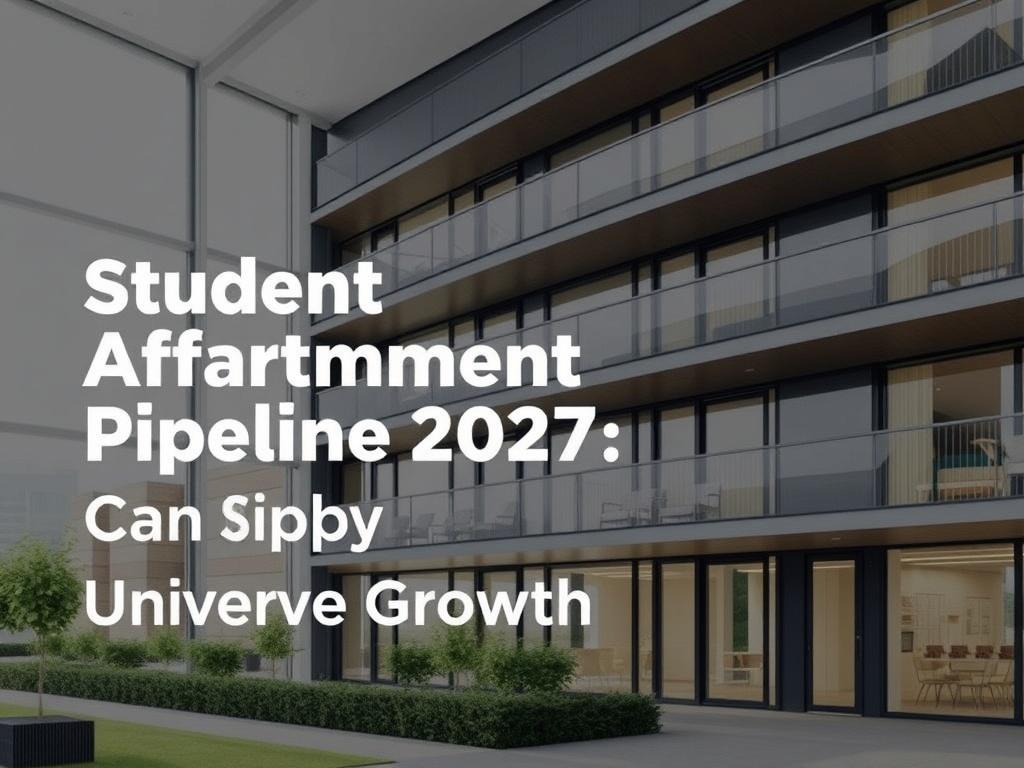
Student Accommodation Pipeline 2027: Can Supply Meet University Growth?
The expansion of higher education institutions worldwide has intensified demand for student housing. In Cyprus, this trend is particularly pronounced due to a rapid increase in university enrollment, international student inflow, and shifting student preferences. The question confronting stakeholders is whether the current and planned student accommodation pipeline can effectively keep pace with university growth over the next few years.
This detailed examination will zero in on Cyprus as an illustrative and important case. The island’s academic residences reveal much about broader student housing supply challenges, particularly in cities like Nicosia, where university dorm shortages are becoming more acute. By 2027, the projections for future student beds in Cyprus require careful scrutiny against demographic and infrastructural pressures.
The Expanding Landscape of Higher Education in Cyprus
Cyprus is experiencing a significant upsurge in university enrollment numbers, driven not only by local demand but also by the attraction of international students seeking quality education in a Mediterranean setting. Over the last decade, universities in Nicosia and other urban centers have reported consistent yearly increases in admissions.
This growth is supported by Cyprus’s strategic investments in higher education, favorable climate, and relatively low tuition costs compared to other European countries. Additionally, the demand for English-language courses and programs further boosts its appeal globally.
Cyprus’s universities are expanding rapidly, intensifying the need for comprehensive student accommodation strategies.
However, infrastructure development, especially for student housing, has lagged behind academic program expansion. The university dorm shortage in major cities like Nicosia poses a bottleneck for enrollment growth and student satisfaction. This gap requires not only more beds but also upgraded facilities that match evolving student expectations.
Understanding the Student Accommodation Pipeline
The term student accommodation pipeline refers to the forward-looking plan and ongoing projects designed to increase housing capacity for students. It includes university dormitories, private student apartments, and mixed-use developments with dedicated student housing components.
In Cyprus, the student accommodation pipeline integrates both public and private sector initiatives. Universities have begun increasing dormitory capacity, yet private developers, particularly in areas like Nicosia, continue to play a vital role in meeting the surge in housing demand.
Key projects slated for completion by 2027 include expansions to existing university residences and newly constructed Nicosia student apartments 2027, which focus on modern amenities and proximity to campuses. However, the pace and scale of pipeline development may still be insufficient to fully resolve the shortage.
The capacity of the student accommodation pipeline in Cyprus hinges on coordinated efforts by universities, private developers, and municipal authorities.
Factors Influencing Student Housing Supply Cyprus
Several factors shape the supply of student housing in Cyprus:
- Financial Investment: Funding availability dictates the speed and scale of new housing projects.
- Land Availability: Urban centers like Nicosia face spatial constraints, limiting new constructions.
- Regulatory Environment: Zoning laws and building codes impact construction feasibility and timelines.
- Market Demand: Fluctuations in student enrollment numbers and preferences drive supply adjustments.
- Quality Standards: A shift towards higher quality and technology-integrated living spaces influences supply dynamics.
Despite strong market demand, the interplay of these factors often leads to delays in project completion, thus perpetuating the university dorm shortage in Cyprus.
Assessing the Current University Dorm Shortage
The university dorm shortage in Cyprus reveals systemic issues within student housing provision. On campuses, the number of available beds is frequently significantly lower than the total number of students requiring accommodation. This shortfall forces many students to seek housing in the private rental market, frequently at high costs and with reduced security.
Nicosia, as the island’s capital and main higher education hub, exemplifies these challenges. Even with several institutional dorms, peak demand periods leave many students without guaranteed beds. This scenario affects not only the student experience but also indirectly impacts academic performance and retention rates.
The university dorm shortage in Cyprus directly disrupts student well-being and university competitiveness.
Addressing this shortage requires strategic expansion of university-owned housing, incentivization for private developments targeted at student segments, and better regulatory frameworks facilitating housing projects. Without these, pressure on the existing housing stock will intensify, potentially discouraging prospective students.
Statistical Overview: Student Housing Demand vs. Supply in Cyprus
| Year | University Enrollment | Available Student Beds | Shortage / Surplus |
|---|---|---|---|
| 2020 | 25,000 | 15,000 | -10,000 |
| 2023 | 32,000 | 18,500 | -13,500 |
| 2027 (Projected) | 40,000 | 25,000 | -15,000 |
These numbers highlight persistent and increasing mismatches between demand and supply across Cyprus. The student accommodation pipeline aims to reduce these gaps but will need a significant acceleration to meet projected needs.
Future Student Beds Cyprus: Projections and Challenges
Looking ahead, the future student beds Cyprus must provide will be influenced by trends in university enrollment, international student policies, technological integration in education, and broader socio-economic factors.
Universities are actively planning expansions, with commitments to increasing dormitory space by 30%-40% over the next five years. At the same time, government incentives for private investors to develop dedicated student housing settlements are emerging.
However, challenges remain. These include securing adequate financing, attracting developers amid uncertain market conditions, and overcoming logistical hurdles in urban construction zones. Additionally, evolving student preferences demand more than just bed capacity — safety, connectivity, and social spaces have become critical to the attractiveness of accommodation options.
Meeting the future student beds Cyprus requires a holistic approach integrating quantity, quality, and affordability in housing solutions.
Innovations and Trends in Student Accommodation
The future of student housing is not merely about adding more beds but about transforming living environments. Projected developments by 2027 include:
- Smart Dormitories: Incorporating IoT technologies for enhanced security and convenience.
- Sustainable Buildings: Energy-efficient designs to reduce environmental impact and utility costs.
- Flexible Leasing: Contracts that accommodate short-term or semester-based stays.
- Community-Centered Spaces: Places encouraging social interaction and study groups.
Such trends respond to the modern student’s lifestyle, ensuring that the student accommodation pipeline does not just fill beds but creates vibrant living communities.
Nicosia Student Apartments 2027: A Closer Look
Nicosia plays a pivotal role in Cyprus’s student housing ecosystem. The Nicosia student apartments 2027 are among the most anticipated developments aimed at bridging the accommodation gap. These projects focus on strategically located, well-equipped apartments close to university campuses and public transportation networks.
The designs emphasize a balance of privacy and community, offering options from single studios to multi-bedroom units. The apartments are expected to integrate modern security systems, high-speed internet access, study areas, and communal amenities such as gyms and lounges.
Nicosia student apartments 2027 symbolize the push towards high-quality, accessible private student housing options in Cyprus.
Moreover, these projects aim to alleviate pressure on traditional university dorms, diversifying the available housing stock and reducing dependence on a limited supply of institutional beds. Private developers are collaborating closely with universities to ensure alignment of supply with actual demand.
Impact of Student Housing on Local Economy and Society
The growth of the student accommodation market in cities like Nicosia has broad economic implications. Increased housing development generates construction jobs and stimulates local businesses. Furthermore, well-housed students tend to participate more actively in community life, boosting urban vibrancy.
However, there are risks. Over-supply can drive down prices, affecting landlords, while under-supply leads to inflated rents and student hardship. Balancing these effects requires continuous monitoring and agile policy responses.
Strategies to Align Supply with University Growth
Addressing the student housing challenge in Cyprus requires a multi-pronged approach. The following strategies are critical:
- Enhanced Public-Private Partnerships (PPPs): Leveraging investment capacity and expertise across sectors.
- Streamlined Regulatory Processes: Accelerating approvals and removing bureaucratic hurdles for housing projects.
- Financial Incentives: Grants, tax breaks, and subsidies to encourage purpose-built student accommodation developments.
- Data-Driven Planning: Using enrollment projections and student preference surveys to guide capacity expansion.
- Integration of Student Voices: Engaging students in planning processes to ensure developments meet actual needs.
These approaches must be dynamic to adapt to unforeseen changes in university growth patterns and market conditions.
Ensuring Sustainability and Accessibility in Student Housing
As Cyprus develops its student accommodation pipeline, sustainability and accessibility have emerged as paramount concerns. Sustainable design reduces environmental impact, lowers operating costs, and improves student health and well-being.
Accessibility considerations make sure that housing caters to students with disabilities or special needs, fostering inclusivity. This includes physical access features and accommodations for diverse social and economic backgrounds.
Integrating green building standards and universal design principles into future projects will be essential for aligning student housing supply Cyprus with global best practices.
The future of student accommodation lies in environmentally responsible, inclusive housing that supports diverse student populations.
Measuring Success: Evaluating the 2027 Student Accommodation Pipeline
As 2027 approaches, the success of Cyprus’s student accommodation pipeline will be measured by several key indicators:
- Sufficiency of Student Beds: Degree to which supply matches or exceeds demand.
- Quality and Modernity: Facilities meet contemporary standards for comfort and technology.
- Affordability: Rents remain within viable ranges for the average student income.
- Occupancy Rates: High occupancy suggests market alignment; oversupply or low occupancy indicates imbalances.
- Student Satisfaction: Feedback reflects positive living conditions and convenience.
Regular reporting and transparent data sharing among universities, developers, and authorities will facilitate continuous improvement of student housing solutions.
A New Era for Student Living in Cyprus Awaits
The interaction between university growth and student housing supply in Cyprus is at a critical juncture. The challenges of a university dorm shortage and an insufficient student accommodation pipeline require immediate, sustained action. While progress is underway with expansions in Nicosia student apartments 2027 and other initiatives, the gap between demand and supply remains significant.
Success depends not only on increasing numbers of future student beds Cyprus can offer but also on improving the quality, affordability, and sustainability of accommodations. Collaborative, data-driven, and student-focused strategies are essential to ensure that the island’s higher education ecosystem remains vibrant and competitive.
As Cyprus moves toward 2027, the momentum must not slow. Meeting student accommodation needs will secure not only educational growth but also the social and economic vitality of Cyprus’s urban centers. This is a defining moment to shape a future where every student has a safe, comfortable place to call home, enhancing the educational journey and future opportunities.
Frequently Asked Questions
- What is causing the university dorm shortage in Cyprus?
The shortage is primarily due to rapid enrollment increases outpacing the development of new student housing facilities. - How many new student beds are projected by 2027?
Projections estimate around 25,000 student beds by 2027, still below total anticipated demand. - Are there enough private student apartments in Nicosia?
Private apartments are increasing but remain insufficient to fully alleviate the housing gap. - What role do private developers play in Cyprus’s student accommodation pipeline?
Private developers are vital for expanding housing options beyond university dorms, especially with focused projects like Nicosia student apartments 2027. - How is sustainability being incorporated into new student housing?
Many new projects include energy-efficient designs and environmentally friendly materials to reduce carbon footprints and operating costs. - Will rental prices for student housing increase due to demand?
Without supply expansion, rents may continue rising; thus, increasing affordable housing options is critical. - What strategies can help balance supply and demand in student accommodation?
Public-private partnerships, financial incentives, regulatory streamlining, and data-driven planning are key strategies to align supply with university growth.